Subcategories
Products ()
Inclusive of all taxes
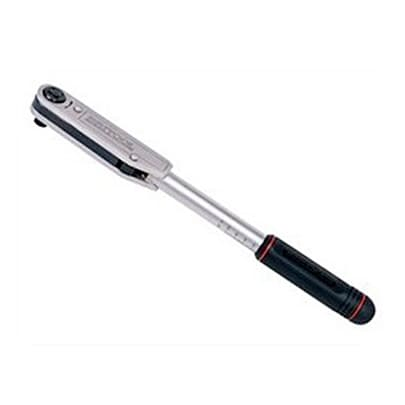
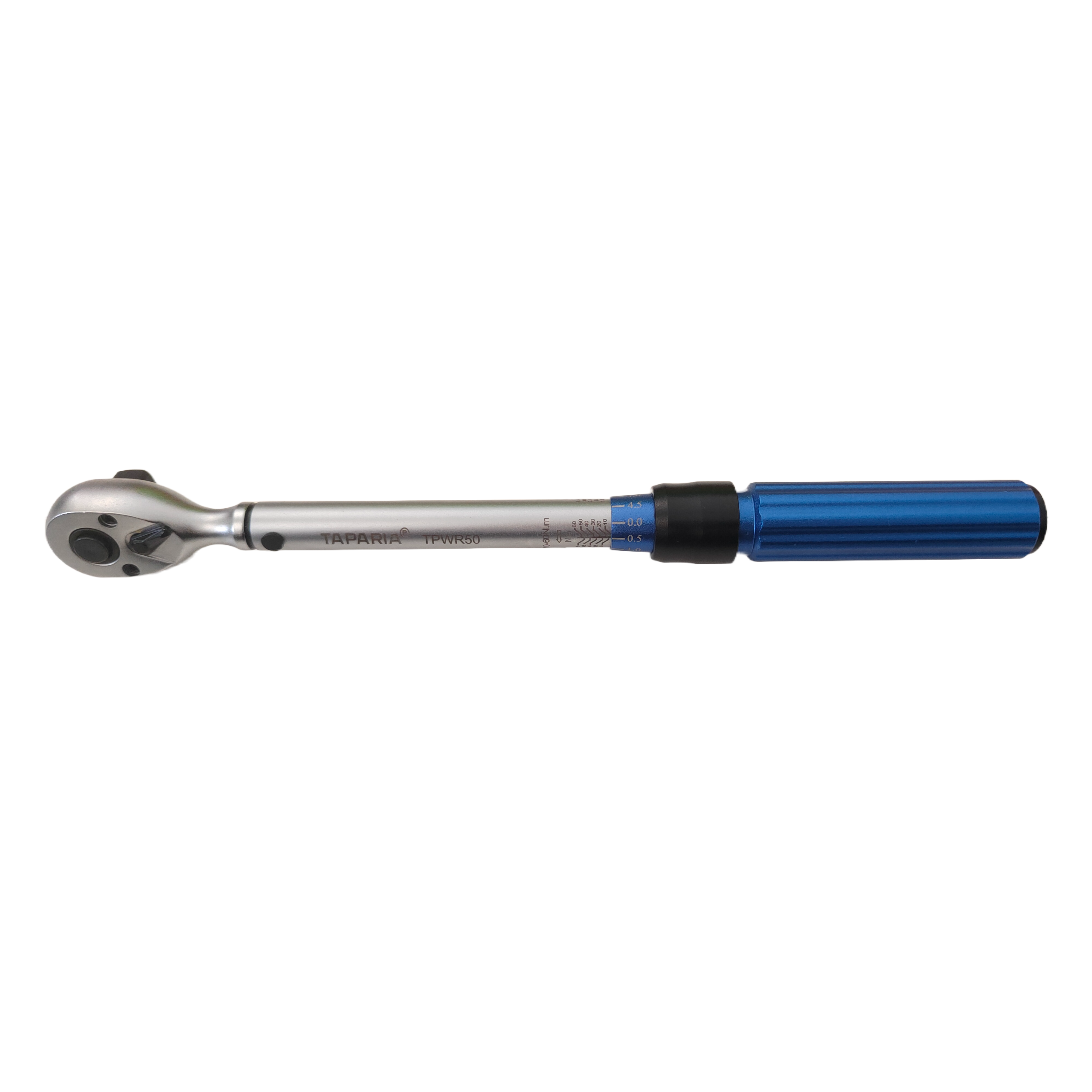
Taparia torque wrenches in standard and ratchet types for controlled fastening in workshops and maintenance.
Taparia torque wrenches standard and ratchet type

Inclusive of all taxes

Inclusive of all taxes
Showing 2 of 2 products
A torque wrench measures and applies a set torque to a fastener, so bolts and nuts are tightened to the value the joint needs rather than by feel. Taparia offers two types in this range.
Standard torque wrench: a click-type or beam-style tool with a fixed or adjustable setting. Suited to general workshop tightening where the torque value is set once and applied repeatedly.
Ratchet type torque wrench: combines a ratchet head with a torque-setting scale or click mechanism, allowing quick turning in tight spaces before the final torque is applied.
When choosing, check the torque range against the fastener specification, the drive size (commonly 1/4, 3/8 or 1/2 inch) that matches your sockets, and whether the unit is calibrated. Torque wrenches should be stored at their lowest setting to preserve the spring and periodically recalibrated for accuracy.

A standard torque wrench is a single-purpose tool used to apply a set torque. A ratchet type torque wrench includes a ratcheting head so the handle can be turned in one direction without removing the socket, making it faster in confined spaces.
Choose the drive size that matches your sockets. 1/4 inch is for light fasteners, 3/8 inch for general automotive and workshop work, and 1/2 inch for heavier bolts that require higher torque.
Set the wrench to its lowest torque value after use so the internal spring is not kept under tension. Keep it clean, avoid dropping it, and have it recalibrated periodically to keep readings accurate.
It is not recommended. Using a torque wrench to loosen fasteners or to apply torque beyond its rated range can damage the mechanism and affect calibration.