Subcategories
Products ()
Inclusive of all taxes
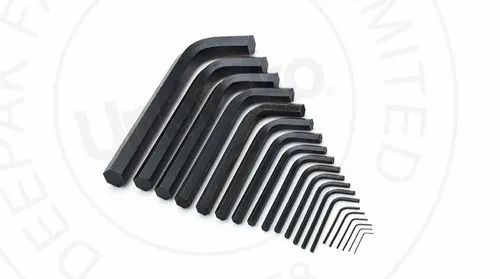
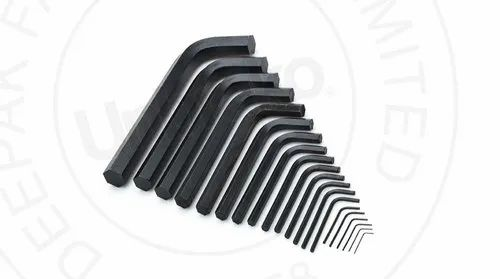
Metric and inch hex keys in L-type and T-handle designs for assembly and maintenance work.
Socket Keys (Allen / Hex Keys) — Metric & Inch Series, L-Type and T-Handle

Inclusive of all taxes

Inclusive of all taxes
Showing 2 of 2 products
Socket keys, also called Allen or hex keys, are hexagonal-section tools that drive socket head cap screws and grub screws. They are sold in metric (mm) and inch (AF) sizes. Choose metric keys for screws marked with metric threads and inch keys for older or imported equipment that uses inch fasteners. Using the wrong size will round off the socket, so check the screw head before buying.
L-type keys are inexpensive and work well for quick, low-torque tasks. T-handle keys give better grip and let you turn the fastener faster with the fingers, which suits repeated assembly. Ball-end variants allow driving at an angle. For high-torque joints, use a key of proper hardness and length so the tip does not twist or break.
Check the material and hardness listed in the specifications. Alloy steel keys with a black oxide or chrome finish resist wear and corrosion better than plain carbon steel. Confirm the standard (such as ISO or DIN) if your job specifies one.

Metric keys are sized in millimetres across the flats and fit metric socket head screws. Inch keys are sized in fractions of an inch and fit inch-series screws. Measure the socket in the screw head or match it to the fastener spec before buying.
L-type keys are compact and cheap and suit light, occasional use. T-handle keys give a better grip and faster turning for repeated work or longer screws. Many workshops keep both.
The key size may be slightly too small or too large, or the key may be worn or low in hardness. Use the exact size, seat the key fully into the socket, and replace worn keys.
Alloy steel keys are preferred for regular industrial use because they resist bending and wear. Black oxide or chrome finishes help against rust. Check the hardness value in the specifications for heavy-duty tasks.