Subcategories
Products ()
Inclusive of all taxes
Drilling machines for metal, wood and construction work, from hand-held drills to magnetic and bench models.

Inclusive of all taxes
Showing 1 of 1 products
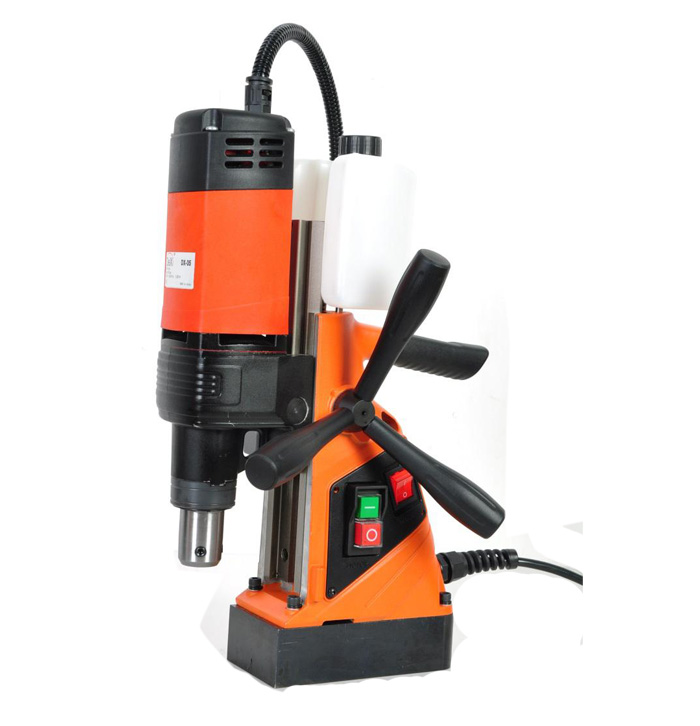
A drilling machine is a power tool used to make holes in metal, wood, masonry and other materials. Choose the type based on the work. Hand-held drills suit site and maintenance jobs. Bench and pillar drills suit repeat drilling in a workshop. Magnetic drilling machines hold themselves to steel plate or structural sections by a magnetic base, which makes them useful for drilling large holes in beams, columns and frames where a fixed machine cannot be set up.
Check the power rating in watts, the maximum drill diameter the machine can cut, the spindle speed range, and the supply voltage (single-phase or three-phase, as applicable). For magnetic drills, confirm that the magnetic base force and the cutter shank type match the cutters you already use. Use annular cutters for large holes in steel and twist drills for smaller holes. Keep coolant or cutting oil in use on steel to extend cutter life.
Always use the guard, wear eye protection, and secure the workpiece. Magnetic drills must be used only on clean, flat, sufficiently thick steel, since the magnet loses holding force on thin, painted or rough surfaces.

A magnetic drilling machine uses an electromagnetic base to clamp onto steel, so it can drill large holes in fixed steel structures without a drill press. A standard drill is held by hand or mounted on a stand and suits a wider range of materials.
No. It needs a flat, clean, ferrous surface of adequate thickness. Paint, rust, curved surfaces or thin sheet reduce the holding force and can cause the machine to move during drilling.
Higher wattage suits thicker steel and larger cutter diameters. Light maintenance work can use a lower rating. Match the rating to the largest hole and the material you plan to drill.
Cutting oil or coolant is recommended when drilling steel, especially with annular cutters. It reduces heat, improves hole quality and extends cutter life.